Published

Personal vs Work life

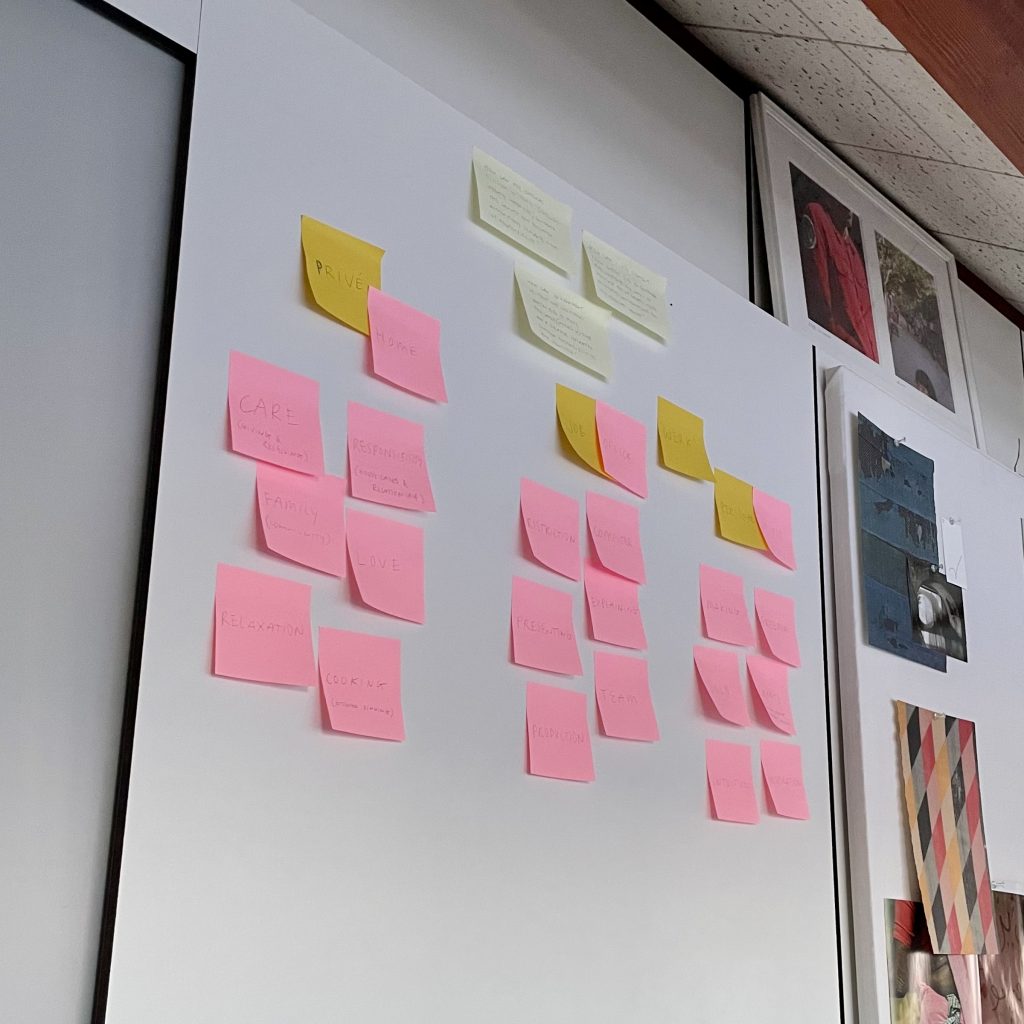
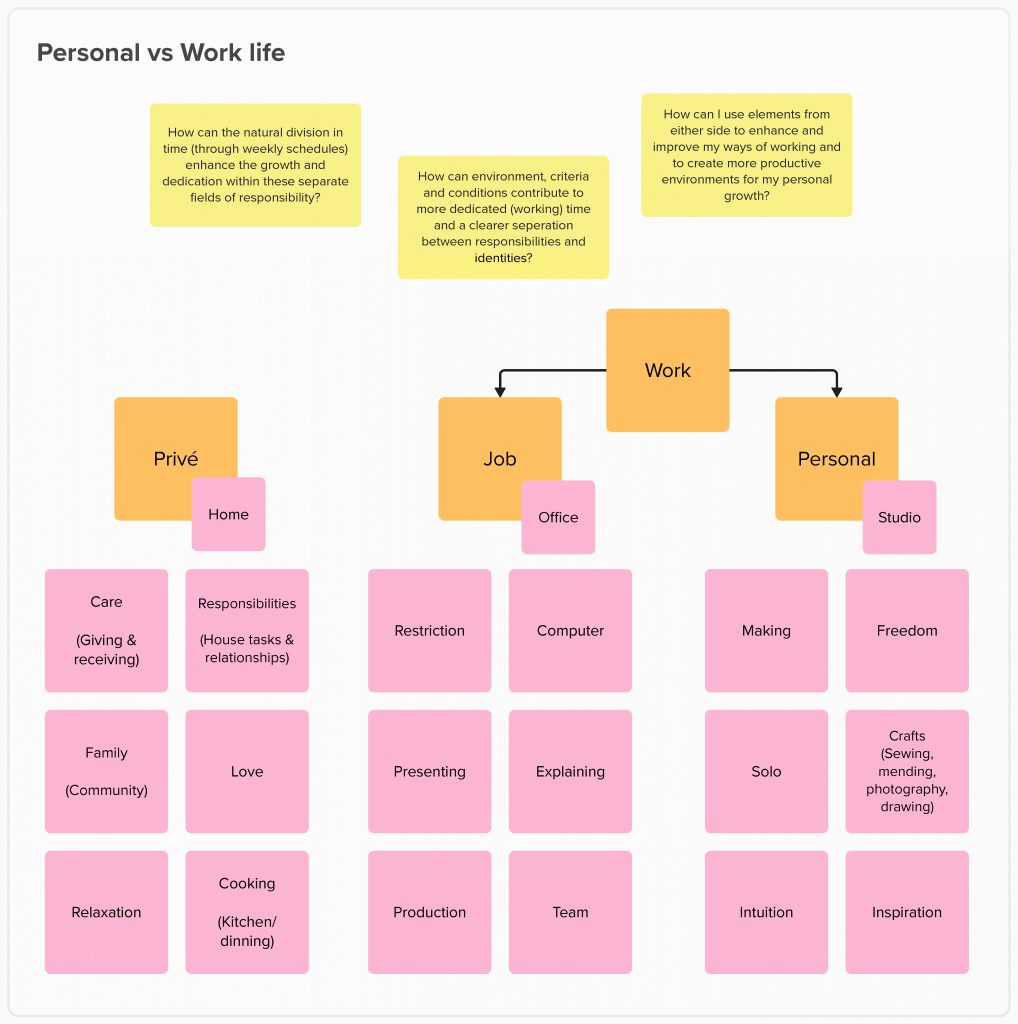
Finally (after months of hanging somewhat neglected on my studio wall) I have made the much needed and appropriate effort to digitize this set of post-its. At some point during my parental leave (when I wasn’t a father for all that long yet) I had a very ‘motivated’ morning in which I went up to my studio first thing, coffee in hand. My new role as a father put time and responsibilities into a different perspective for me. The exercise of structuring my thoughts around this subject helped me to understand how I have certain strengths, and how I exercise these strenghts in specific areas (sometimes singularly). Being aware of this has helped me to think clearer about which path I want to take with my career and personal interests and how I can use strengths interchangeably between ‘lanes’. I’m not sure if I have been able to answer the questions at the top as of yet, but they are rather ment as mental prompts then concrete answerable questions or targets.

Published

Pharrell Williams On His Vision for Louis Vuitton

  • It’s okay to dream beyond the realm of possibility.
  • These days so much can be fluffed; authenticity stands out.
  • Luxury is about aspirations (economically free, educated, equal access – freedom).
  • You design for peoples life, for moments in their day – “I want you to feel empowered, to be seen (as a person), to express yourself”.
  • Recognise that you ARE a living human being.
  • Go! Don’t look back, for what? You can see how far you have come later. I’m scarred for when I take my eyes of the sun, I loose my way.

https://podcasts.apple.com/nl/podcast/the-business-of-fashion-podcast/id1225204588?l=en&i=1000631225499

Published

Unconscious ideation

In the background I’m slowly working, building on this concept of a clothing brand (and sometimes an online gallery/store). Fleeting thoughts get stored away into a section where they brew until they have formed into a more substantial idea. Soon, I will have to capture some of them, for I can’t risk loosing them. But I have also realised that for me to actually progress towards these concepts of entrepreneurial endeavours, I have to mostly create and action things. It is important to get my thinking straight (and formalised into writing), but it shouldn’t stop me from progressing with intuition. The next steps are therefor not in order, but give a general overview of things to finalise and start semi-simultaneously;

• Write down core business manifesto/principles
‏‏‎‏‏‎‏‏‎ ‎‏‏‎ ‎ ‎ ‎ • Ideas for business operations (how things are sold)
‏‏‎‏‏‎‏‏‎ ‎‏‏‎ ‎ ‎ ‎ • Ideas for brand identity

• Start designing (print-out inspiration, create mood-board and draw designs)

• Make outstanding pieces
‏‏‎‏‏‎‏‏‎ ‎‏‏‎ ‎ ‎ ‎ • Paris sweater
‏‏‎‏‏‎‏‏‎ ‎‏‏‎ ‎ ‎ ‎ • Mathilde’s pants/overshirt
‏‏‎‏‏‎‏‏‎ ‎‏‏‎ ‎ ‎ ‎ • London handkerchief
‏‏‎‏‏‎‏‏‎ ‎‏‏‎ ‎ ‎ ‎ • Shorts (Chinese handloom fabric)

• Educate myself on clothing making
‏‏‎‏‏‎‏‏‎ ‎‏‏‎ ‎ ‎ ‎ • Pattern drafting course


One big change has been that my almost decade long ‘obsession’ and main focus on China as an inspiration and reference point, has made way for other wider arrays of interests and inspirations. This, to be honest, has been a big step in the right direction for my ideas of starting up the clothing brand that I keep envisioning. To be able to have a broader range of inspirations to work from, gives me a wider scope and that is something I needed right now. It is motivating and I’m looking forward to see what I’ll be looking at for inspiration and will come up with in my designs.

Published

DSM

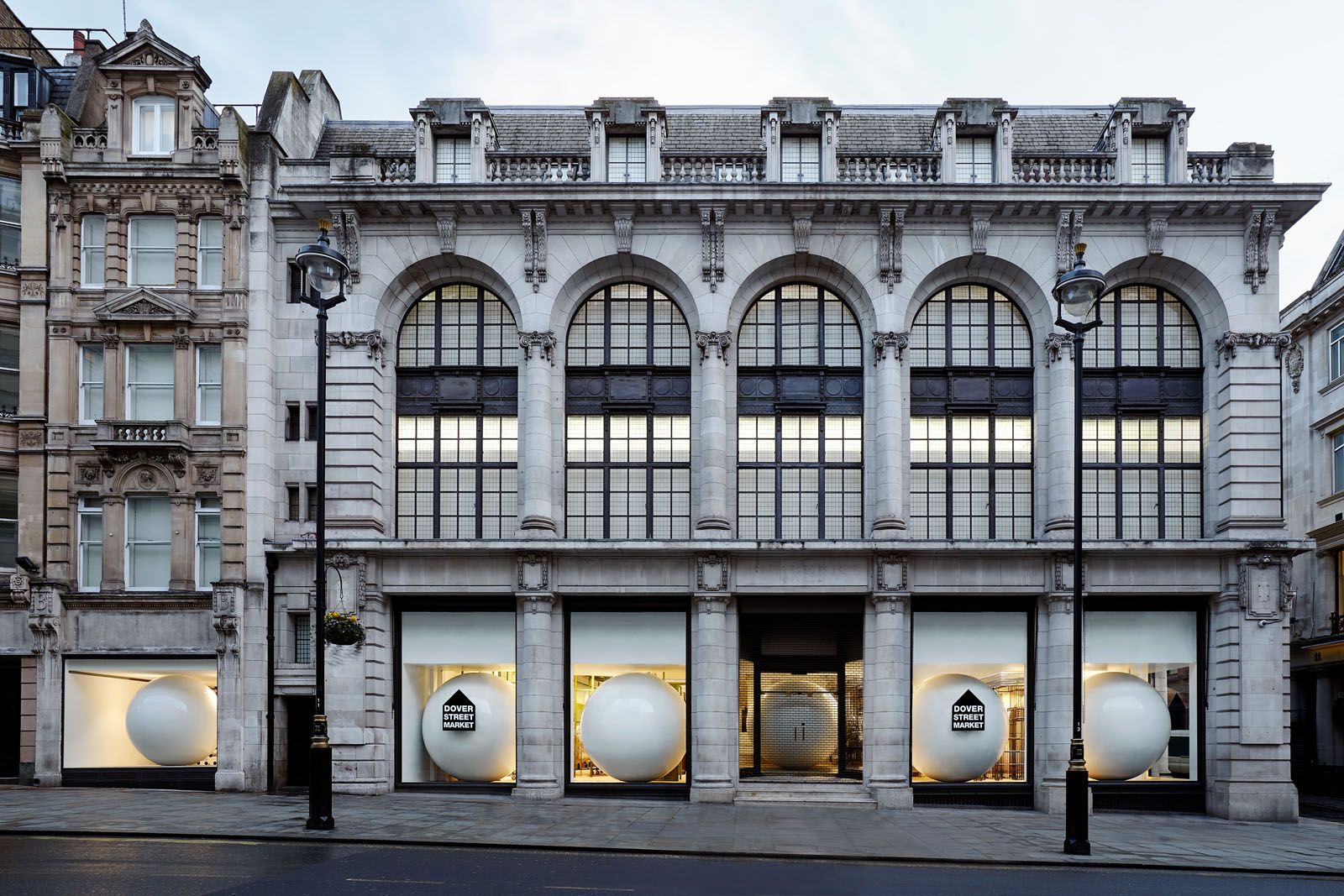
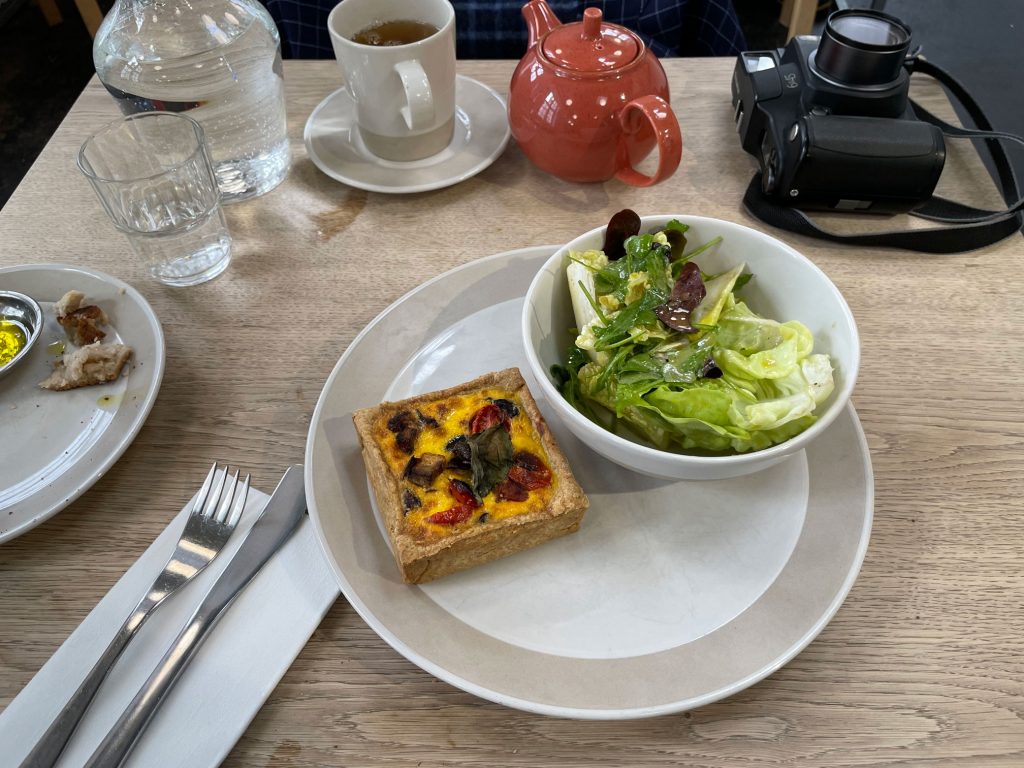
One of my favourite places in London is Dover Street Market (probably my No.1 favourite place to be honest). I have been going there for many years to soak up the vibe and gain immense inspiration from the store design/layout, clothing designs on display, people that go and work there and Rose bakery. The complete package makes it’s worth visiting with frequency because there is always something new to discover or gain creatively.

The DSM logo has come to represent this experience and memory I have of this place. When I look at their logo, I feel connected to my inspired self. Analysing the logo further;

  • The shape is a sort of primal drawing shape, representing a house. This simplicity creates a sort of open platform for the diverse selection of brands and styles within the store.
  • A home which represents the family, which is very suited to their store concept; a group of brands together under one roof, some united by brand origin (Comme des Garçons) some related to it and yet others invited in as new friends.
  • “Dover Street Market” as a form of an adres places it in a space and time, a location*. Variations of the logo add the city name underneath “Market” (NEW YORK, LONDON, GINZA).
  • Market” signifies a collection of sellers/retailers and a certain temporality to what’s on offer. It also brings up an image of a lively and communal atmosphere.

*Dover Street Market London, which was the first location of all DSM locations, was located originally on Dover Street in Mayfair, London. This is where its name originates from. Although the London store has since moved to Haymarket, its name is still linked to the first store location, rooting it in a place and linking it to a certain time.

Published

Observations on trend

Clothing design creates garments that may or may not be trendy.

Trend is based on community, on mass; when a majority considers something of a new/unique (design)style and want to associate themselves with it, you could see a trend appearing of appreciation for this certain style.

When a garment or style is in trend i.e. trendy, you could also say it is in fashion.

A trend being constant would mean it at some point becomes the norm to some extend. When a trend increases for it to degrease at a later stage, you could say it is a fashionable trend. For example; it has come into fashion to be associated with this trend (A), but trend A subsequently becomes surpassed by another trend (B), thus A is not able to sustain itself to become the new norm.

Fashion design therefor is a rather misguided term as it is not the designer that creates fashion, its the people that decide what is in fashion (which in tern is based on trend).

Something can be fashionable when it is designed to go along a certain trend that is currently in fashion. However, it is very unlikely that a designer creates something that will become fashionable, if it is not linked to a current trend within society. The term fashion designer therefor merely means that the designer is designing something that follows a currently fashionable trend (which either can be on the rise or decline, depending on the foresight of the designer). Success as a designer, or the success of their designs, is somewhat dependent on a variety they can bring within the boundaries of a current trend and on the suitability with a currently fashionable trend.
Published

Global vs Local, Fashion vs Clothing

Current trends in fashion seem to be mostly self referential, in the sense that the clothing designs feed off (street)style and archival pieces/references. This creates a strong image that is coherent but refreshing as it’s based on designs and styles that float around in the subconscious minds of the wearer and creator simultaneously (at least amongst those that closely follow/relate to the fashion world). Extending beyond this realm of reference, it has become apart that a wider perspective on art has become a secondary source of inspiration (e.g. music, sculpture, painting).

Although it seems to be aspirational for many to become familiar with these reference points that have instigated pieces of contemporary fashion, it has become less important to know (or show, in the designs) a cultural background and history. Taking Louis Vuitton (Virgil Abloh) and Givenchy (Matthew Williams) as examples here, there is a certain influx of American perspectives within the fashion world (and within traditionally Parisian houses). But also beyond that, when you look at Balenciaga for example, Demna Gvasalia (Georgian) uses inspiration found in Eastern Europe. This however often seems to be a referencing a certain styles, which in turn is often an aspirational versions of an American one.

Thinking about this further

Is it possible to express locality in fashion design? Within the current day and age, in which everything is instantly shareable and readable online, is it even appropriate? Or is that precisely the reason why it would be important to share local identities, exactly because we are so connected and therefor loose a sense of place within the world?

How does expressing locality within fashion design look like? Is clothing design the same as fashion design? Can clothing more effectively represent a local identity than fashion, as fashion suggests a globally shared acceptance of something being “fashionable”?

Published

On how 2020 changed the course of the fashion industry

Here at Hermès we use an equestrian phrase that seems particularly apt in this day and age: ‘Straight ahead, calm and poised.’ Fashion maintains a strange relationship with time: it consumes it. Yesterday tends to be devalued in favour of novelty, supposedly the only carrier of the future, but modernising does not mean throwing away the time that came before. We can’t erase the past. The frantic and superficial aspect of fashion is not helpful and doesn’t interest me. We should focus on creation first. I am optimistic: we are all artisans of innovation!

Véronique Nichanian of Hermès, in Fantastic Man No.32 (F/W 2020/21)

Published

Change in fashion

Fashion brings joy, inspiration and beauty to many, but increasingly it seems like an unmanageable beast stuck in a rigid and unsustainable set of parameters that is has constructed around itself as it tries to plough ahead in the distracting and pleasurable business of producing new and desirable garments.

Issue No. 32 (FW20/21) of Fantastic Man