Published
Idea – Sweater of polarization
Left and right, sewn together by a thin thread of “strands” of Facebook, Google, Amazon, Murdock etc.
Published
Left and right, sewn together by a thin thread of “strands” of Facebook, Google, Amazon, Murdock etc.
Published
As my thoughts go; I want to start something of my own, namely a business selling things I make myself.
But what is this thought worth if you never start working towards a realisation of it? Starting is the hardest part, making the first move. Once you’re in the flow, you’re flying. But getting the engine going… how?
By doing you, by not going the copy cat route. Define what it is that you really want, where these urges really do come from, and start using that as the fuel man!
Let me list it out for myself, because who else is here to get inspired by these words than myself (at this point) really. There are two ideas floating around, and it’s worth finding out where these ideas come from (what motivations/urges) and what it would take to get started (realistically, not hypothetically):
Where it comes from:
– Against fast fashion (new collection every season)
– Against continues sale (sign of overproduction)
– Against unsustainable practices (of production, of wearing things once)
– Against the copy cat nature (‘globalisation of style’)
+ Pro paying for quality (high price, high value)
+ Pro ‘never out of fashion’ (keeping things available for longer)
+ Pro upcycling (there is already enough out there)
+ Pro individuality (local styles, designs with a story/concept)
What it means:
➀ Translating inspirations into clothing pieces/designs
➁ Using memories of places to inspire (visual) research and design
➂ Creating a representation of the world, spreading local identities globally, without becoming a globalisation of style
➃ Creating a flexible brand identity that can adapt to/represent cross-cultural pollination (instead of monocultures)
Where it comes from:
– Against uninspiring ‘art’ (‘wall fillers’ encountered in short-stays)
– Against the short lifespan of pictures (instagram fast feed)
– Against the business of representation (quality approved by…)
– Against exclusivity of art photography (limited supply)
+ Pro alternative visual expressions (tools for pondering)
+ Pro slow photography (analog methods, careful selection)
+ Pro self-representation (being able to earn of your own creations)
+ Pro domestication of art photography (inspiration is for everyone)
What it means:
➀ Printing and framing photographs from my archive
➁ Using photography to represent something between the abstract and picturesque
➂ Creating a website that is inspiring as a portfolio while simultaneously being functional as a commercial environment (there can’t be confusion about it being a webshop, but it has to equally be able to inspire)
➃ Creating a brand identity that encompasses more then myself and photographic print sales alone
Now these two business objectives could be realised onto separate lanes, but don’t necessarily need to exclude each-other. They could merge into one. And to be honest, the fact that they don’t usually overlap should not be a reason for me not to do so either. If it works for my, if its my dream to do so, then so be it. Be yourself and do you. After all, the motivations behind both these business ideas are rather similar; out with the homogenisation of creativity and culture, in with the independence and affluence of styles.
Living in temporary accommodation with most, if not all of our personal belongings in storage, I find it hard to even find the motivation to sit down and do this (write these words). Finding motivation/inspiration to even think about making work seems to take a lot of energy at the moment. But luckily that’s changing by the help of a list I started writing ‘those that inspire’, of people that are able to push me in the right direction just by doing what they do best.
Some smaller scale things I can start working on, that help me work towards my larger goals (as described above) could be the following:
✪ Draw without the pressure of ‘working towards something’ (contradictory but true)
✪ Organise my reference library into one place (migrate all to Are.na)
✪ Research brand positioning (instagram, SEO, naming, business plan)
➊ Embroider items of clothing I hardly wear
➊ Create graphic designs that could be screen printed onto something
➊ & ➋ Think of a name that is scaleable (with the potential of combining everything into a single platform)
➋ Select photo’s to be printed from those that I have already scanned
➋ Compare printing/framing costs and calculate cost vs selling price
➋ Sell some prints to my network (via instagram)

Published
2020, what a year it has been. Might I share some thoughts on that tomorrow perhaps, if I may, I may. But not today, as today I’m trying to settle into the couch for the first time in a while. It’s (after all) the start of my holiday. And while I’m slowly adjusting to relaxation, but am still with a busy/full mind, I’m starting to observe habits of mine that I’d like to break with in the year ahead. One of those observations I’d like to capture here today as it has come back to me multiple times over the past year, is as follows;
These mental notes have came to me every now and then this year. At times I can be so soaked up by it all that I don’t actually get to think for myself anymore. I want to get back into my inspired, creative and curious self again. And no excuses; don’t fool yourself. You won’t do better when you are ahead of yourself in terms of knowledge, or references. These come with time and come when the time is ripe. I learn through practice, doing.
Published
Ever tried. Ever failed. No matter. Try again. Fail again. Fail better.
by Samuel Beckett
Published
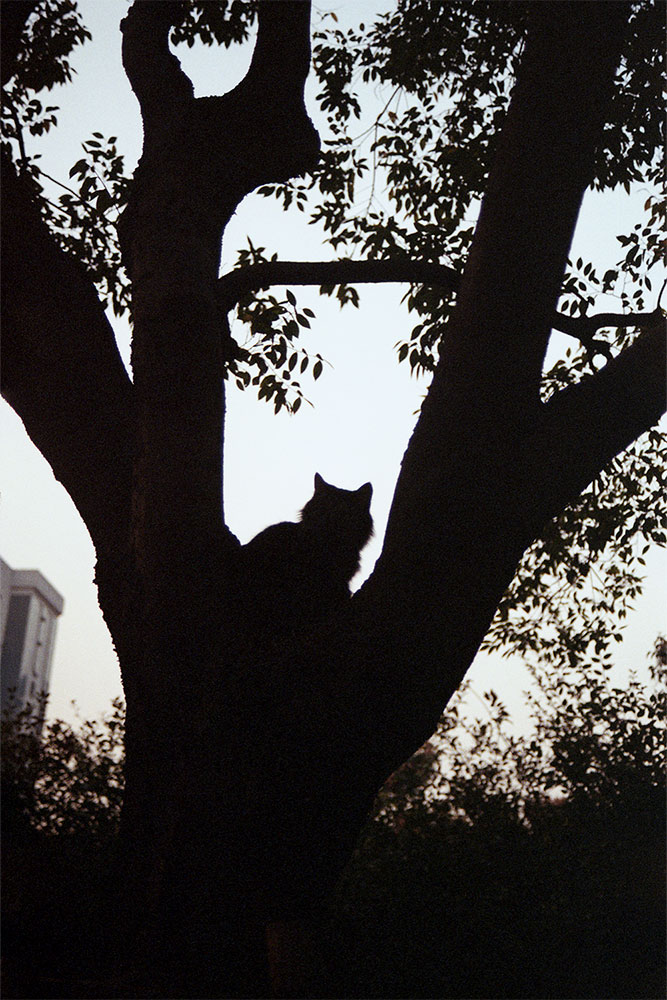
Quilt of cat silhouette photo taken in Shanghai, or a T-shirt? or could be made into tote bag?
Published
Autumn leaves on the ground as inspiration for a clothing piece made of patches of Harris Tweed
Published
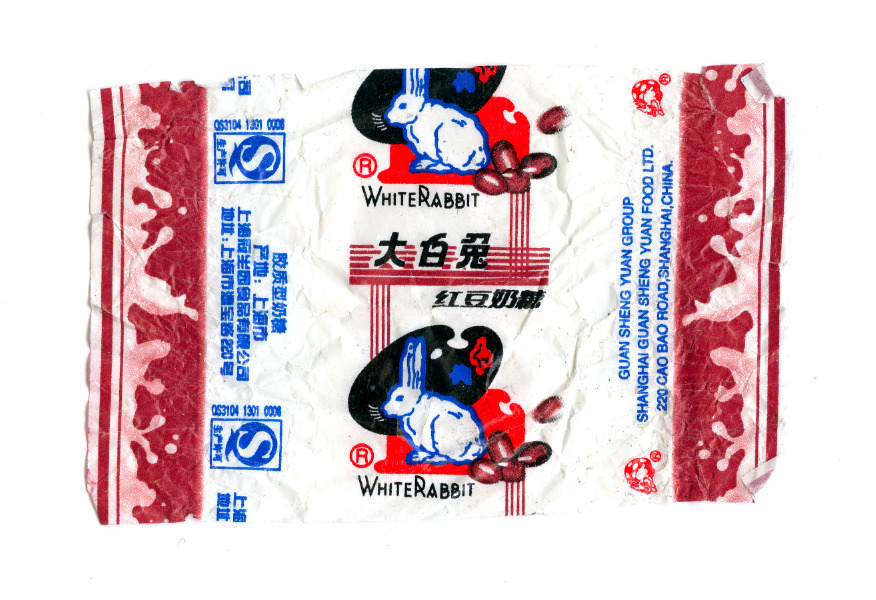
When talking about the current culture of China and everyday life object which divine this, to me this example is one of the first things that comes to mind.
Founded by ABC Factory in Shanghai in 1943, the candy first had a Micky Mouse figure on its packaging and was called ABC Micky Mouse Sweets. But becoming state owned in the revolution by the 1950′s, its name and packaging needed a make over since the original mouse was seen as a symbol worshiping the West. Although having had some minor changes in standing position, the rabbit and accompanying color palette in a three colours has been kept in its art-deco style ever since. The candies were given as gifts for the tenth National Day of the People’s Republic of China in 1959. After the revolution it has been growing in popularity. Former Premier Zhou Enlai gave White Rabbit candies as a gift to American president Richard Nixon when he visited China in 1972. Its enormous sales figure of 600 million yuan in 2004 and its world wide export to over 40 countries shows that the candies are China’s top brand of sweets.

In 2008 the candy was listed among many other milk-based food products in China being contaminated with melamine and it was removed from stores. Much wider known is the previous use of melamine in infant milk-powder, with over 52,000 reported cases of children made sick. However the response (also to the finding of melamine in White Rabbit candy) was quiet strong, the amount found in the White Rabbit candies did not seem to be substantial enough to be considered dangerous, “a 60kg adult […] would have to eat more than 47 White Rabbit sweets […] every day over a lifetime to exceed the tolerable threshold.”
History interestingly and surprisingly shows how even a small candy can be changed and influenced by Chinese culture and be influential within it. In that way this is the perfect example of looking at Chinese culture by looking at objects of daily use.
Published
My first time to China (and traveling abroad internationally) was on invitation by Erwin Slegers to help assemble the exhibition 100 Years of Dutch Graphic Happiness and to give a two week long workshop with second year graphic design students at the Nanjing University of the Arts. I did this together with classmate Rein op ‘t Root (and for the workshop also with independent designers Hansje van Halem and Michiel Schuurman). This experience on its own was very unique and overwhelming.
After being in Nanjing for about two days, I wrote an email to my family to tell them I’m O.K. and am doing good. I also shared my very first impressions of China. Re-reading them, they show well how overwhelming the whole experience was to me. It also shows that, right from the bat, I did not see this is as strange or weird world – rather I saw it as interestingly different. It also shows to me how words alone are not enough to describe the differences I experienced, since most of it is so visual.
Hi Mum, Dad and Phillip!
From Nanjing China!
Such a chaos, such a great city, and what a country this is.
So Cool!
We are already starting to get used to things, some things are getting habits even.
Flying on its own was already such a special and new experience, but arriving in an enormous city as Shanghai even more so! We got a taxi, and the drive took us 45 min. and still we did not even had seen the whole city. After every curve of the road there was another kind of “Bijlmer” like apartment block, rising to the sky. And apparently people are living in all of them (seen from the laundry hanging on the balconies).
We went with the train to Nanijng and were picked up by Fin Zhao and his girlfriend.
Everything went well. Getting cash out, fine. Buying tickets, fine. Arranging a cab, fine.
And so we arrived in Nanjing, first in the Green Tree inn hotel. Very shabby but everything fine though. It really felt a bit like a book of Adriaan van Dis, or something like it.
The next day we moved to the “professional building” where normally lecturers and other people stay. A good and clean hotel. Chic I would say so.
We are mostly very busy with arranging thing and getting stuff for the exhibition we are building. Everything on the University campus is brand new, because the University just celebrated their 100th anniversary.
They make nice stuff around here, really. Rein says constantly; “they are going to win in this way man!”, and you would actually almost start to think so. Nothing is old-fashioned, everything feels quite normal, but in a Chinese way. Neither do people look funnily to us or anything like that.
We are trying to arrange more practical tools for the exhibition, which we will need to finish things up for example. This we are doing with 5 other students. Its great fun. They are very eager to help us and to talk with us, even though they do not quite understand everything we say in English.
It is truly real great fun here and we are located really in the centre of the city. We literally see everything! We are really in China.
Such great fun, and its not even like the third day.
I’m taking a lot of photos but mostly analog. Still didn’t got much time to keep up with our blog, but surely we will be doing that soon.
Skype too, does not fit so well in our daily routine, but perhaps tomorrow or the day after. We should have a look. Maybe Philip should download it already, and then he can add me to his account.
Hopefully everything is well with all of you as well! Talk to you soon!
Bye!
Published
Water is fluid, soft, and yielding. But water will wear away rock, which is rigid and cannot yield. … What is soft is strong.
― Laozi
China has spend much of the last 300 years lurching from one disaster to another. From military crisis to crisis of identity. Yet, perhaps because China’s past is so full of loss and it’s future is so uncertain, many artists seem passionate to preserve their Chinese sense of identity.
Andrew Graham-Dixon in the BBC 4 documentary series Art of China (2014), SE1 E3
Although Andrew’s quote focuses on artists who work in the field of traditional Chinese art (with it’s ancient background which is still highly appreciated as an art-form and practice), it is also applicable to modern Chinese art. Modern Chinese artists often show their culture in a very honest way. Chinese people have a big sense of community and although there might be inequality, anger and things that need changing; they always feel strongly related to their own culture and country.
Chinese art is growing towards a more abstract practice. But still it relates itself to the country’s origins and culture (seen for example in the work of Ai Weiwei and Song Dong). Referencing its own cultural background, you often find in their work comments or a call for change. The culture of China, its origins and its rigidness towards change, are solid like a rock. Its embedded in peoples minds and souls. Moving slowly forward but not forgetting their past. Modern (Chinese) art however, is fluid like water. Wanting to go forward and moving quickly. It makes people nationally and internationally aware of China’s current position and its potential. Perhaps modern Chinese art can wear away (smooth) a rigid rocks and make change happen. At the same time, modern Chinese art comes forth out of its tradition. Its part of the same culture. It doesn’t want to wear off the rock it is made of. It shapes/reshapes itself but stays true to its origin.
Another perspective found in the BBC series, is that on capitalism: Perhaps there exists a thought that China is becoming more western and westernised. But seen in the following quote and connecting that with the previous statement, you could say that neither art nor culture in China are changing. Rather they are developing.
After all, what could be more Chinese than worrying about materialism. Chinese thinkers have been worrying about that for more than 2000 years. And the tiger economy is hardly new [referring to an artwork shown by Xu Bing]. Capitalism is not a Western import, but a Chinese invention. Visit the financial hearth of Shanghai, gaze up at it’s towering monuments to getting and spending, and what do you see? A bold new skyline, yes; but expressing an ancient Chinese impulse to make money. Modern Shanghai is just another version of Emperor Qinzong’s city of Kaifeng, immortalised in the Qingming scroll [referring to the artwork Qingming Shanghe Tu by Zhang Zeduan], where paper money changed hands, back in the 11th century. It’s just another version of Emperors Qianlong’s Prosperous Suzhou with its 260 shops.
John Tamny in a Forbes article (22 January 2025)
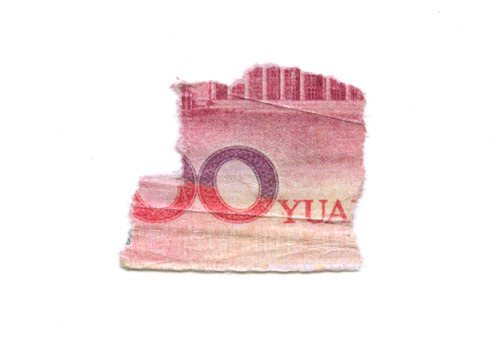
Developing, moving forward with links to its past and staying true to its origin: I have experienced this myself during my time in the country. China is nothing like a western world and not in any way moving towards becoming westernised. China is a country with a very unique culture. I’m interested in understanding more of this and I see the importance of showing it and trying to explain it to others. China does not need to become more western – The west should rather become more understanding of other cultures, including China. By looking at objects of daily life, current culture (its origins and histories) I hope to provide a more complete perspective and understanding of China.
Published
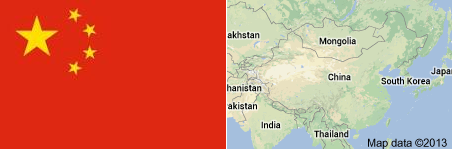
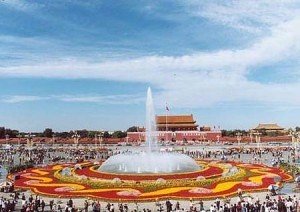
After two years, I finally found time to start to process my thoughts on China and to further investigate its history, language and culture. Not per se historically, but more so in the present and current culture. How daily life is affected by the past and how this past is seen in the present. Also how the present is represented by different people and in different ways. China has left a big impression on me and made me (very)interested in everything connected and related to it. I feel the need to express my interest – investigate it – and show my views on China, because I think it will help me to understand its culture better. Writing a publication piece-by-piece on this blog will help me to look back on thoughts and re-revise them where necessary (in the final publication).
I have been to China three times within a year’s time (about 8 months in total), this is a list of flights taken to and from China.
30 days
14 November 2012
Amsterdam to Moscow, 13:00 – 19:10 (SU2551)
Moscow to Shanghai, 21:10 – 19:45 (SU208)
10 December 2012
Shanghai to Moscow, 01:15 – 07:35 (SU207)
Moscow to Amsterdam, 11:20 – 12:00 (SU2250)
30 days
5 April 2013
Brussels to Helsinki, 11.40 – 15:15 (AY2812)
Helsinki to Chongqing, 17:30 – 07:10 (AY0055)
3 May 2013
Chongqing to Amsterdam, 08.00 – 18:00 (MU5420)
150 days
13 July 2013
Amsterdam to Zurich, 09:45 – 11:15 (LX725)
Zurich to Beijing, 13:20 – 05:15 (LX196)
9 December 2013
Beijing to Zurich, 06:45 – 10:40 (LX197)
Zurich to Amsterdam, 12:25 – 14:05 (LX728)