The original TED talk in which Simon explains the basic principles of the What, How, Why with some brand examples.
Simon Sinek’s why as described on his website: We are here to inspire people to do the things that inspire them so that, together, each of us can change our world for the better. Why = what is your purpose or cause or believe
Those are the 3 steps on how to sell a product en why a product can be successful or not. […] The Why is about why you begin with selling products and what therein is the end-goal.
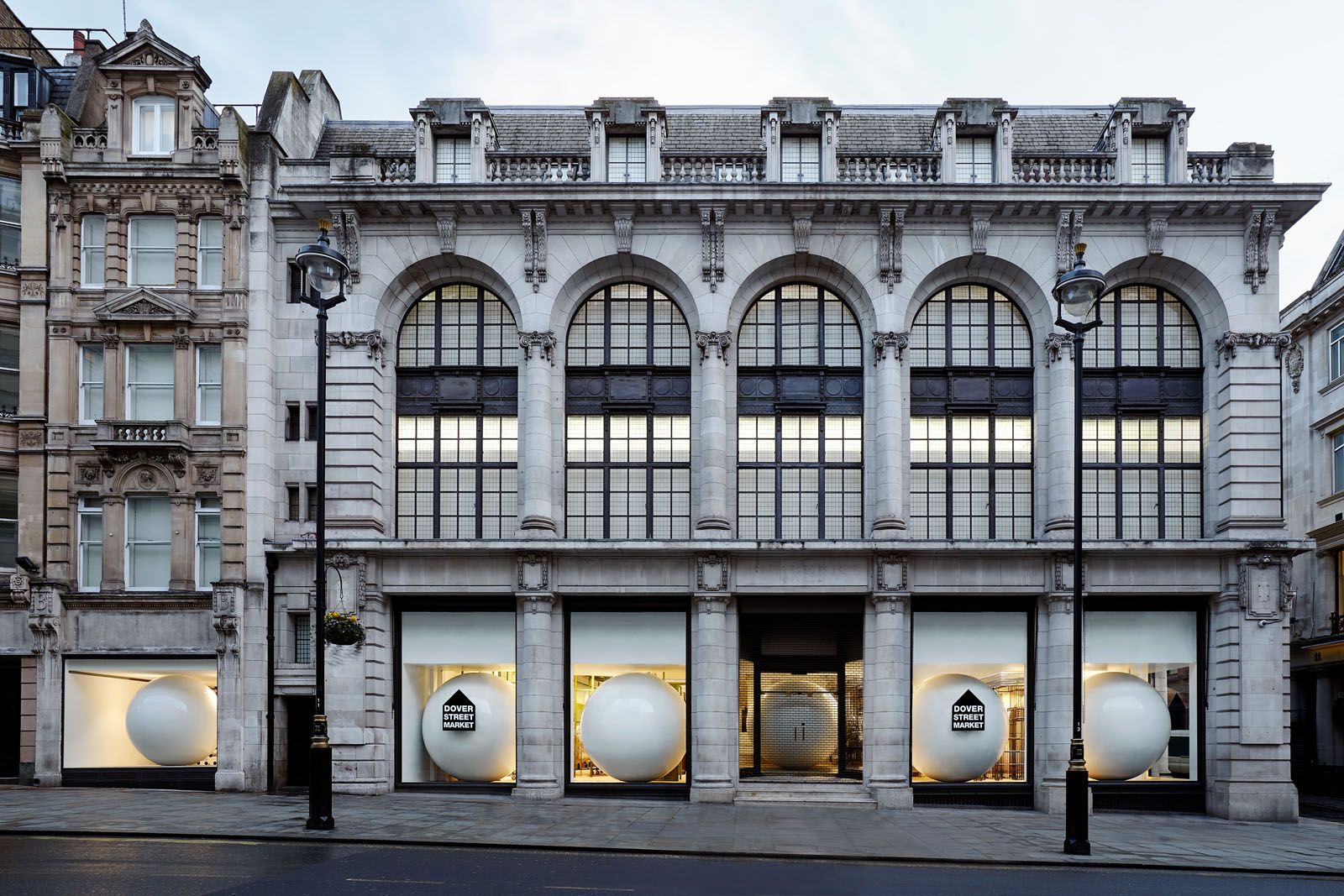
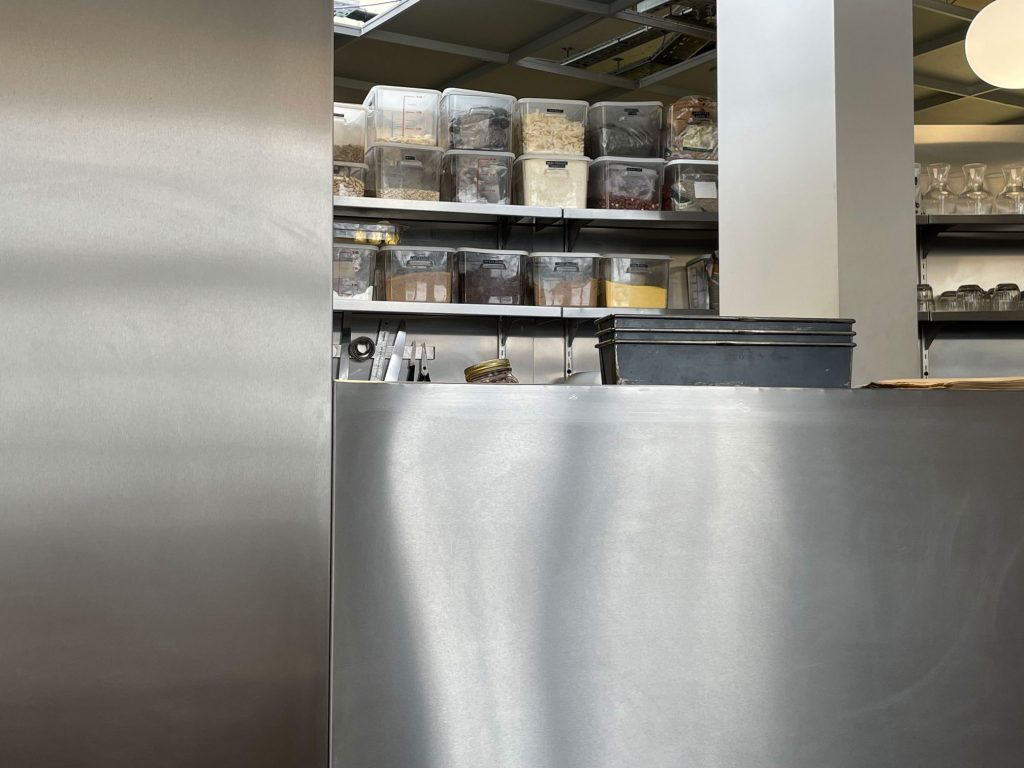
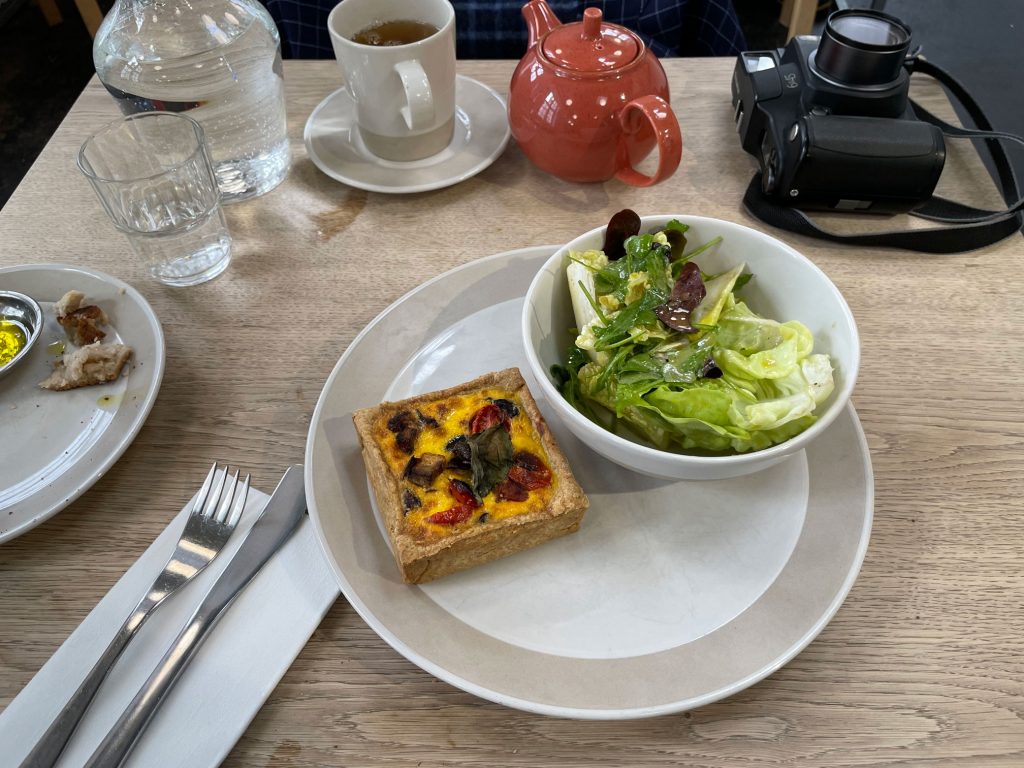
One of my favourite places in London is Dover Street Market (probably my No.1 favourite place to be honest). I have been going there for many years to soak up the vibe and gain immense inspiration from the store design/layout, clothing designs on display, people that go and work there and Rose bakery. The complete package makes it’s worth visiting with frequency because there is always something new to discover or gain creatively.
The DSM logo has come to represent this experience and memory I have of this place. When I look at their logo, I feel connected to my inspired self. Analysing the logo further;
The shape is a sort of primal drawing shape, representing a house. This simplicity creates a sort of open platform for the diverse selection of brands and styles within the store.
A home which represents the family, which is very suited to their store concept; a group of brands together under one roof, some united by brand origin (Comme des Garçons) some related to it and yet others invited in as new friends.
“Dover Street Market” as a form of an adres places it in a space and time, a location*. Variations of the logo add the city name underneath “Market” (NEW YORK, LONDON, GINZA).
“Market” signifies a collection of sellers/retailers and a certain temporality to what’s on offer. It also brings up an image of a lively and communal atmosphere.
*Dover Street Market London, which was the first location of all DSM locations, was located originally on Dover Street in Mayfair, London. This is where its name originates from. Although the London store has since moved to Haymarket, its name is still linked to the first store location, rooting it in a place and linking it to a certain time.
Clothing design creates garments that may or may not be trendy.
Trend is based on community, on mass; when a majority considers something of a new/unique (design)style and want to associate themselves with it, you could see a trend appearing of appreciation for this certain style.
When a garment or style is in trend i.e. trendy, you could also say it is in fashion.
A trend being constant would mean it at some point becomes the norm to some extend. When a trend increases for it to degrease at a later stage, you could say it is a fashionable trend. For example; it has come into fashion to be associated with this trend (A), but trend A subsequently becomes surpassed by another trend (B), thus A is not able to sustain itself to become the new norm.
Fashion design therefor is a rather misguided term as it is not the designer that creates fashion, its the people that decide what is in fashion (which in tern is based on trend).
Something can be fashionable when it is designed to go along a certain trend that is currently in fashion. However, it is very unlikely that a designer creates something that will become fashionable, if it is not linked to a current trend within society. The term fashion designer therefor merely means that the designer is designing something that follows a currently fashionable trend (which either can be on the rise or decline, depending on the foresight of the designer). Success as a designer, or the success of their designs, is somewhat dependent on a variety they can bring within the boundaries of a current trend and on the suitability with a currently fashionable trend.
Current trends in fashion seem to be mostly self referential, in the sense that the clothing designs feed off (street)style and archival pieces/references. This creates a strong image that is coherent but refreshing as it’s based on designs and styles that float around in the subconscious minds of the wearer and creator simultaneously (at least amongst those that closely follow/relate to the fashion world). Extending beyond this realm of reference, it has become apart that a wider perspective on art has become a secondary source of inspiration (e.g. music, sculpture, painting).
Although it seems to be aspirational for many to become familiar with these reference points that have instigated pieces of contemporary fashion, it has become less important to know (or show, in the designs) a cultural background and history. Taking Louis Vuitton (Virgil Abloh) and Givenchy (Matthew Williams) as examples here, there is a certain influx of American perspectives within the fashion world (and within traditionally Parisian houses). But also beyond that, when you look at Balenciaga for example, Demna Gvasalia (Georgian) uses inspiration found in Eastern Europe. This however often seems to be a referencing a certain styles, which in turn is often an aspirational versions of an American one.
Thinking about this further
Is it possible to express locality in fashion design? Within the current day and age, in which everything is instantly shareable and readable online, is it even appropriate? Or is that precisely the reason why it would be important to share local identities, exactly because we are so connected and therefor loose a sense of place within the world?
How does expressing locality within fashion design look like? Is clothing design the same as fashion design? Can clothing more effectively represent a local identity than fashion, as fashion suggests a globally shared acceptance of something being “fashionable”?
As my thoughts go; I want to start something of my own, namely a business selling things I make myself.
But what is this thought worth if you never start working towards a realisation of it? Starting is the hardest part, making the first move. Once you’re in the flow, you’re flying. But getting the engine going… how?
By doing you, by not going the copy cat route. Define what it is that you really want, where these urges really do come from, and start using that as the fuel man!
That’s right!
Let me list it out for myself, because who else is here to get inspired by these words than myself (at this point) really. There are two ideas floating around, and it’s worth finding out where these ideas come from (what motivations/urges) and what it would take to get started (realistically, not hypothetically):
➊ Clothing line
Where it comes from: – Against fast fashion (new collection every season) – Against continues sale (sign of overproduction) – Against unsustainable practices (of production, of wearing things once) – Against the copy cat nature (‘globalisation of style’) + Pro paying for quality (high price, high value) + Pro ‘never out of fashion’ (keeping things available for longer) + Pro upcycling (there is already enough out there) + Pro individuality (local styles, designs with a story/concept)
What it means: ➀ Translating inspirations into clothing pieces/designs ➁ Using memories of places to inspire (visual) research and design ➂ Creating a representation of the world, spreading local identities globally, without becoming a globalisation of style ➃ Creating a flexible brand identity that can adapt to/represent cross-cultural pollination (instead of monocultures)
➋ Online gallery
Where it comes from: – Against uninspiring ‘art’ (‘wall fillers’ encountered in short-stays) – Against the short lifespan of pictures (instagram fast feed) – Against the business of representation (quality approved by…) – Against exclusivity of art photography (limited supply) + Pro alternative visual expressions (tools for pondering) + Pro slow photography (analog methods, careful selection) + Pro self-representation (being able to earn of your own creations) + Pro domestication of art photography (inspiration is for everyone)
What it means: ➀ Printing and framing photographs from my archive ➁ Using photography to represent something between the abstract and picturesque ➂ Creating a website that is inspiring as a portfolio while simultaneously being functional as a commercial environment (there can’t be confusion about it being a webshop, but it has to equally be able to inspire) ➃ Creating a brand identity that encompasses more then myself and photographic print sales alone
Now these two business objectives could be realised onto separate lanes, but don’t necessarily need to exclude each-other. They could merge into one. And to be honest, the fact that they don’t usually overlap should not be a reason for me not to do so either. If it works for my, if its my dream to do so, then so be it. Be yourself and do you. After all, the motivations behind both these business ideas are rather similar; out with the homogenisation of creativity and culture, in with the independence and affluence of styles.
How to start while in limbo
Living in temporary accommodation with most, if not all of our personal belongings in storage, I find it hard to even find the motivation to sit down and do this (write these words). Finding motivation/inspiration to even think about making work seems to take a lot of energy at the moment. But luckily that’s changing by the help of a list I started writing ‘those that inspire’, of people that are able to push me in the right direction just by doing what they do best.
Some smaller scale things I can start working on, that help me work towards my larger goals (as described above) could be the following:
✪ Draw without the pressure of ‘working towards something’ (contradictory but true) ✪ Organise my reference library into one place (migrate all to Are.na) ✪ Research brand positioning (instagram, SEO, naming, business plan)
➊ Embroider items of clothing I hardly wear ➊ Create graphic designs that could be screen printed onto something
➊ & ➋ Think of a name that is scaleable (with the potential of combining everything into a single platform)
➋ Select photo’s to be printed from those that I have already scanned ➋ Compare printing/framing costs and calculate cost vs selling price ➋ Sell some prints to my network (via instagram)
2020, what a year it has been. Might I share some thoughts on that tomorrow perhaps, if I may, I may. But not today, as today I’m trying to settle into the couch for the first time in a while. It’s (after all) the start of my holiday. And while I’m slowly adjusting to relaxation, but am still with a busy/full mind, I’m starting to observe habits of mine that I’d like to break with in the year ahead. One of those observations I’d like to capture here today as it has come back to me multiple times over the past year, is as follows;
❑ You don’t have to be interested in everything
❏ You don’t have to know everything about your interests
❑ You won’t ever be fully up-to-date, learning never stops
❑ You don’t need to collect/archive if you won’t exploit it
❑ You don’t have to rely on out-side sources for inspiration
These mental notes have came to me every now and then this year. At times I can be so soaked up by it all that I don’t actually get to think for myself anymore. I want to get back into my inspired, creative and curious self again. And no excuses; don’t fool yourself. You won’t do better when you are ahead of yourself in terms of knowledge, or references. These come with time and come when the time is ripe. I learn through practice, doing.
China has spend much of the last 300 years lurching from one disaster to another. From military crisis to crisis of identity. Yet, perhaps because China’s past is so full of loss and it’s future is so uncertain, many artists seem passionate to preserve their Chinese sense of identity.
Although Andrew’s quote focuses on artists who work in the field of traditional Chinese art (with it’s ancient background which is still highly appreciated as an art-form and practice), it is also applicable to modern Chinese art. Modern Chinese artists often show their culture in a very honest way. Chinese people have a big sense of community and although there might be inequality, anger and things that need changing; they always feel strongly related to their own culture and country.
Chinese art is growing towards a more abstract practice. But still it relates itself to the country’s origins and culture (seen for example in the work of Ai Weiwei and Song Dong). Referencing its own cultural background, you often find in their work comments or a call for change. The culture of China, its origins and its rigidness towards change, are solid like a rock. Its embedded in peoples minds and souls. Moving slowly forward but not forgetting their past. Modern (Chinese) art however, is fluid like water. Wanting to go forward and moving quickly. It makes people nationally and internationally aware of China’s current position and its potential. Perhaps modern Chinese art can wear away (smooth) a rigid rocks and make change happen. At the same time, modern Chinese art comes forth out of its tradition. Its part of the same culture. It doesn’t want to wear off the rock it is made of. It shapes/reshapes itself but stays true to its origin.
Another perspective found in the BBC series, is that on capitalism: Perhaps there exists a thought that China is becoming more western and westernised. But seen in the following quote and connecting that with the previous statement, you could say that neither art nor culture in China are changing. Rather they are developing.
After all, what could be more Chinese than worrying about materialism. Chinese thinkers have been worrying about that for more than 2000 years. And the tiger economy is hardly new [referring to an artwork shown by Xu Bing]. Capitalism is not a Western import, but a Chinese invention. Visit the financial hearth of Shanghai, gaze up at it’s towering monuments to getting and spending, and what do you see? A bold new skyline, yes; but expressing an ancient Chinese impulse to make money. Modern Shanghai is just another version of Emperor Qinzong’s city of Kaifeng, immortalised in the Qingming scroll [referring to the artwork Qingming Shanghe Tu by Zhang Zeduan], where paper money changed hands, back in the 11th century. It’s just another version of Emperors Qianlong’sProsperous Suzhou with its 260 shops.
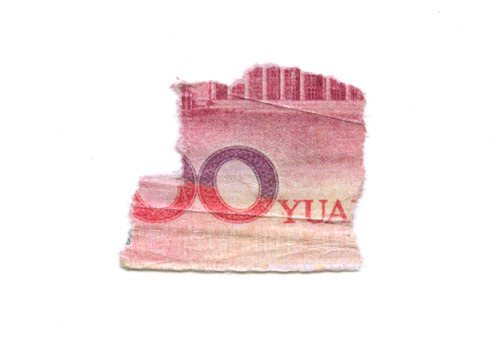
Found teared-up 100 RMB noteon the street in Hunan province
Developing, moving forward with links to its past and staying true to its origin: I have experienced this myself during my time in the country. China is nothing like a western world and not in any way moving towards becoming westernised. China is a country with a very unique culture. I’m interested in understanding more of this and I see the importance of showing it and trying to explain it to others. China does not need to become more western – The west should rather become more understanding of other cultures, including China. By looking at objects of daily life, current culture (its origins and histories) I hope to provide a more complete perspective and understanding of China.